
 Automation
Machinery That Keeps
Your Line Moving
Stretch wrappers, case erectors, packers, and more, specified by the same team that supplies your packaging, so the machine and the materials are matched from day one.
Talk to our automation teamPackaging
equipment
Case & carton
Protective packaging
Wrapping & shrink
Bagging, filling & labeling
End of line
Stretch Wrappers
Secure palletized loads with even, consistent film on every pallet.
A stretch wrapper turns the pallet on a turntable, or sweeps the film around it with a rotary arm, while a powered carriage climbs the mast and applies stretch film from bottom to top. Pre-stretching the film before it reaches the load means less film per pallet and tighter, more stable loads in transit.
- Turntable, rotary arm, and ring configurations
- Semi-automatic to fully automatic
- Matched to the stretch film we supply
Case Erectors
Form, fold, and seal corrugated cases automatically, ready to fill.
A case erector pulls flat, knocked-down cases from a magazine, squares them open, folds the bottom flaps, and seals them with tape or hot melt. Finished cases come off the discharge conveyor ready for your packers, taking one of the most repetitive jobs off the floor.
- Tape or hot-melt bottom sealing
- Changeover for multiple case sizes
- Matched to the corrugated we supply
Case & Tray Packers
Load product into cases and trays at line speed, every time.
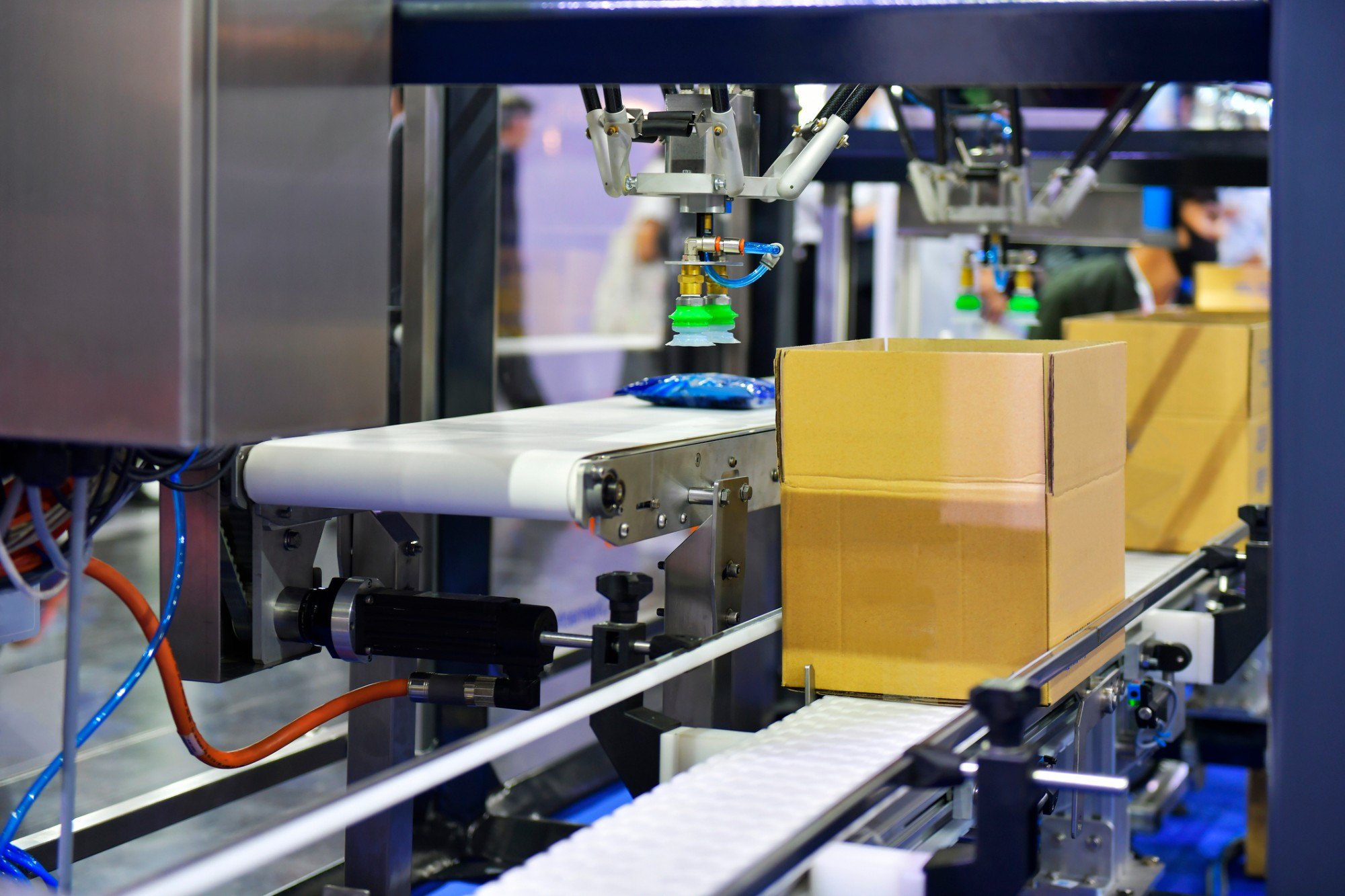
A case or tray packer collects product from your line, groups it into the right count and pattern, and places it into cases or trays by dropping, side-loading, or robotic pick-and-place. Packed cases move straight on to sealing and palletizing.
- Drop, side-load, and pick-and-place styles
- Regular slotted cases, wraparounds, and trays
- Pairs with case erectors and sealers
Cartoners
Erect, load, and close folding cartons in one continuous motion.
A cartoner takes flat carton blanks from a magazine, opens them, loads product from a bucket conveyor or by hand, then tucks or glues the end flaps closed. Horizontal end-load machines suit most consumer goods; vertical top-load styles handle product that is dropped in.
- Horizontal end-load and vertical top-load
- Tuck or hot-melt glue closure
- Matched to the folding cartons we supply
Tray Sealers
Seal film lids onto trays to keep food and medical products fresh and protected.
A tray sealer lines filled trays up under a heated sealing head, presses a film lid onto the rim, and trims it cleanly. Machines range from manual benchtop units to automatic inline systems, with options for modified atmosphere and vacuum skin packaging.
- Manual, semi-automatic, and inline
- Modified atmosphere and skin pack options
- Matched to the trays and lidding film we supply
Case Sealers
Close and seal corrugated cases consistently, case after case.
A case sealer folds the top flaps down and runs the case between tape heads that tape the top, the bottom, or both, while side belts drive it through. Uniform models are set for one case size; random models adjust automatically to mixed sizes. High-volume lines can seal with hot-melt glue instead of tape.
- Uniform and random-size models
- Top, bottom, or top-and-bottom taping
- Matched to the tape we supply
Shrink Wrappers
Overwrap products and multipacks in clear, tamper-evident film.
A shrink wrapper surrounds the product with film and seals it, using an L-bar or a continuous side seal, before a shrink tunnel tightens it. It suits retail packaging, multipacks, and anything that needs a clean, protective, tamper-evident wrap.
- L-bar and side-seal styles
- Semi-automatic to high-speed automatic
- Matched to the shrink film we supply
Shrink Tunnels
Shrink film tight and even around every package.
A shrink tunnel carries wrapped product on a conveyor through a heated chamber, where circulating hot air shrinks the film to a tight, uniform finish. Paired with a shrink wrapper or bundler, it turns a loose wrap into a clean, retail-ready package.
- Adjustable heat, airflow, and conveyor speed
- Pairs with shrink wrappers and bundlers
- Compact and high-throughput models
Shrink Bundlers
Bundle cans, bottles, and multipacks, often without a case or tray.
A shrink bundler groups product into the right pattern, wraps it in a sleeve of film fed from rolls above and below the conveyor, then sends it through a tunnel to shrink tight. For many consumer goods, a film bundle can replace a corrugated tray or case.
- Film-only, pad, and tray options
- Automatic collating and feeding
- Can reduce secondary packaging
Auto-Bagging Systems
Fill and seal bags and pouches automatically.
An automatic bagger opens pre-made bags from a roll, holds them open for loading by hand, scale, or feeder, then heat-seals them closed. It suits food, industrial parts, and e-commerce orders, and can pair with a printer to add labels and tracking.
- Bags-on-a-roll and pouch styles
- Works with scales, counters, and feeders
- Pairs with print-and-apply labeling
Labelers & Inkjet Printers
Put product, lot, and shipping information on every package.
Print-and-apply labelers print pressure-sensitive labels on demand with variable data and apply them to cases or pallets as they pass. Inkjet coders print lot codes, dates, and barcodes directly onto the packaging. Both run inline on your conveyor.
- Print-and-apply and pre-printed labels
- Inkjet coding for dates, lots, and barcodes
- Pairs with case sealers and palletizers
Palletizers
Stack cases, bags, and bundles into stable pallet loads.
A palletizer builds pallet loads layer by layer, either with a robot arm that picks and places each case or with a conventional layer-forming machine. It takes heavy, repetitive lifting off your team and builds consistent loads that are ready for stretch wrapping.
- Robotic and layer-style palletizers
- Cases, bags, and bundles
- Pairs with stretch wrappers
Strappers & Band Sealers
Secure bundles and loads with plastic or steel strapping.
A strapping machine feeds strap around the product through an arch, tensions it, and seals the joint, whether you are binding a stack of flat boxes, a single case, or a full pallet load. Continuous band sealers seal filled bags and pouches as they travel through the machine.
- Tabletop, arch, and pallet strappers
- Plastic and steel strapping
- Continuous band sealers for bags and pouches
Air Cushion Systems
Make protective cushioning on demand, right at the pack station.
Air cushion machines turn compact rolls of film into air pillows and cushions exactly when packers need them. Product stays protected in transit, and the material takes a fraction of the storage space of loose fill or pre-made cushioning.
- Air pillows and air cushions
- On demand, at the pack station
- Matched to the void fill materials we supply
High-Speed Flow Wrapping
Seal product in a continuous film wrap, pack after pack.
A horizontal flow wrapper forms film into a tube around each product, seals it along its length, and crimps the ends to make a sealed pack, at high speed. Machines are built for sanitary food environments.
- Horizontal flow wrappers
- Matched to the flow-wrap films we supply
- Sanitary, washdown-friendly designs
Automated Paper Systems
Paper cushioning made on demand, right where you pack.
Automated paper systems convert compact rolls or fan-fold stacks of kraft paper into crumpled fill, pads, and wraps at the pack station. Packers get exactly the amount they need with a tap or a foot pedal, product is blocked and braced in the box, and everything stays curbside recyclable.
- Crumpled fill, pads, wraps, and bracing
- Bench, floor, and automated in-line units
- Recyclable kraft paper we supply
Automated Bubble Systems
Inflate bubble wrap on site instead of storing bulky rolls.
On-demand bubble systems start from a flat, compact film roll and inflate it into bubble cushioning as you need it. One small roll replaces a pallet of pre-made bubble wrap, freeing warehouse space and cutting freight on air.
- Bubble wrap inflated on demand
- Perforated sheets or continuous rolls
- A fraction of the storage space
Conveyance
The connective tissue of an automated line.
Roller, belt, and gravity conveyors move product and cases between stations, accumulate work so machines never starve or back up, and merge, divert, or elevate product across your floor. Done right, conveyance is what turns separate machines into one line.
- Roller, belt, and gravity conveyors
- Accumulation, merges, diverts, and inclines
- Designed around your floor plan and rates
Canning & Bottling
Fill, seal, and move cans and bottles at production speed.
Canning and bottling lines fill containers to an accurate level, seam or cap them, and hand them off to packaging, with depalletizing, rinsing, labeling, and case or tray packing around them. We specify equipment around your containers, products, and throughput, from craft-scale lines to high-speed production.
- Fillers, seamers, and cappers
- Depalletizing, rinsing, and labeling
- Integrated with case and tray packing
Automated Box Right-Sizing
A box built to fit every order, automatically.
Right-sizing systems measure each order as it moves down the line, then cut, fold, and close a box to fit it. Less corrugated, less void fill, and smaller parcels mean lower material and freight cost on every shipment, and fewer trucks moving air.
- Measures every order in-line
- Cuts box height or builds custom boxes
- Less material, void fill, and dimensional freight
Full Line Integration
A total facility throughput audit, then one integrated line.
We start with a total facility throughput audit: where product slows, where people wait, and which machines are starving or backing up the line. Then we design and integrate the full line, from case erecting through palletizing, so every machine, conveyor, and material is matched and runs as one system.
- Total facility throughput audit
- Line design, integration, and start-up
- Machines and materials matched from one partner
The business case
The numbers behind automation.
Every line is different, but the math follows the same pattern: less labor per case, less material per pallet, and far fewer errors. These are typical, published industry benchmarks we use as a starting point before we measure your floor.
- 2.5×faster case erectingAbout 360 cases an hour by hand vs. 900 on an automatic erector.
- 64%less stretch film250% machine pre-stretch vs. roughly 25% by hand, with wrap time cut 70–80%.
- ~30%less tape per caseA case sealer applies a precise, metered length on every carton.
- 99.9%first-read label accuracy40–100+ labels a minute inline vs. 10–15 by hand, with far less rework.
Worked example · case erecting
Illustrative: two shifts, $25/hr fully loaded labor, 52 weeks. Benchmarks from published manufacturer and industry data (Lantech, Orion Packaging, Robopac, Korpack, Wolf Packing). Your results depend on staffing, mix, and volume; we build the real number from a site audit.
Signs you’re ready to automate
- People hand-folding and taping box bottoms
- Un-square cases causing stacking or freight issues
- A full-time case-forming station
- Cartons hand-taped one at a time
- Wasted tape or cases reaching the dock unsealed
- Cases already formed automatically upstream
- People walking film rolls around pallets
- Loose, torn, or uneven wrap
- Damage claims from loads shifting in transit
- Product moved by cart or by hand between stations
- Piles of product waiting for the next step
- An automated station manually fed or unloaded
- Hand filling, counting, or weighing into bags
- Hand heat-sealing or clipping bags shut
- DIM-weight charges or seasonal volume spikes
Beyond the machine
Installed, serviced, and financed.
One partner.
Automation only pays off when it keeps running. We stand behind every line we specify, with a national service network, planned maintenance, and financing that keeps capital free for growth.
02Preventative maintenance
- Monthly
- Quarterly
- Semi-annual
- Annual
Programs that keep equipment running at spec, built around your production schedule.
01Service network
Technicians close to your plants across the U.S. for rapid response at affordable rates when a line needs attention.
03Consumable financing
No separate loan and no equipment invoice. The machine is paid back through a small blended markup on the tape, film, and corrugated you already buy from us, over a term you choose, so your capital stays free while the labor savings start on day one.
Meet our automation lead
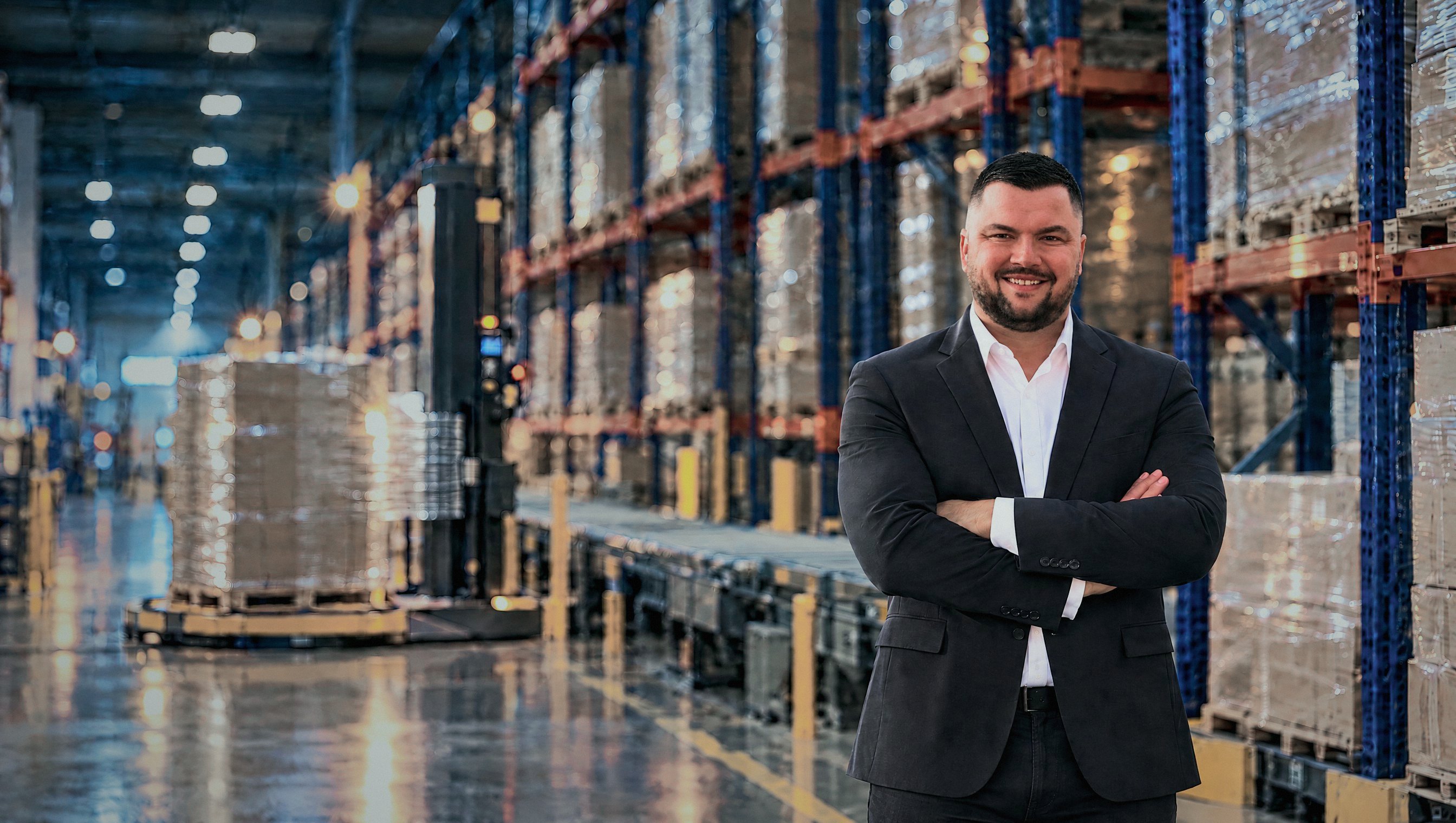
Mike Van Steenburgh
VP, Commercial Strategy · Head of Automation
Mike leads automation and supplier relations at Packaging Exchange. He previously spearheaded a $39M automation program at one of the world’s largest packaging companies, and brings that experience to every line he helps specify, integrate, and support.
Talk to Mike’s teamLet’s spec the
right machine.
Talk with an automation specialist and we’ll review your line, your volumes, and your packaging.
Talk to an automation specialist